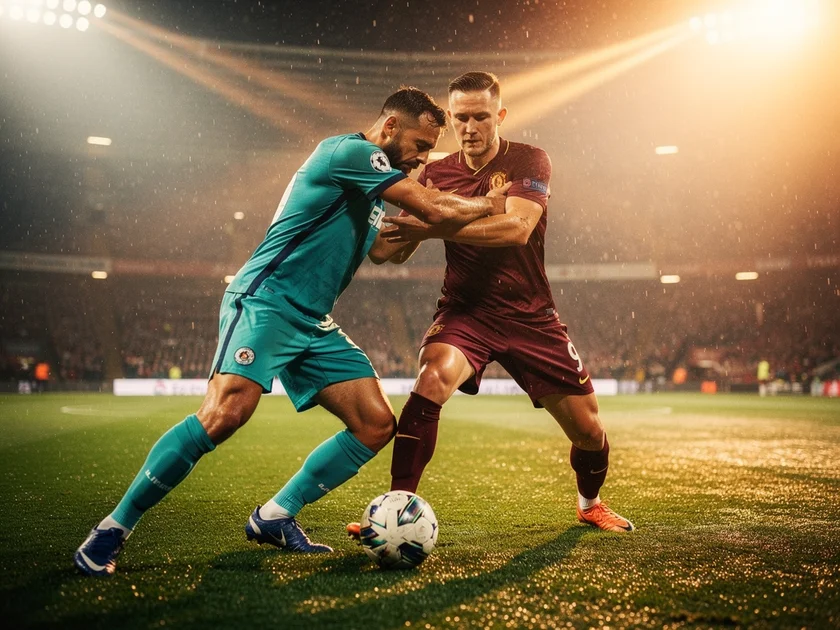
The quadruple dream ended at Wembley on Sunday, as Manchester City delivered a 2-0 victory in the 2026 League Cup final to extinguish any hope of a historic four-trophy haul. Sky Sports pundit Paul Merson, writing March 24, 2026, still backs Mikel Arteta’s side to claim the Premier League title — but insists that will be the sole piece of silverware the north London club lifts this season.
The defeat stings. Three major competitions remain — the top-flight table, the FA Cup, and the Champions League — and Merson’s verdict narrows that horizon considerably.
How City Dismantled the Gunners at Wembley
Manchester City’s win was defined by a dominant second-half shift in tempo. Guardiola’s side absorbed early pressure from Arteta’s men, then turned up the intensity after the interval. Merson described the performance as “a footballing lesson at the highest level”. The Gunners were outclassed once the tempo shifted.
The tactical pattern was instructive. City deployed a mid-block before transitioning into rapid vertical play, exploiting the space behind the Gunners’ high defensive line. Arteta’s pressing unit — so effective in league settings — was bypassed through quick build-up sequences. Early momentum failed to produce goals, and City punished that profligacy with clinical efficiency in the second 45 minutes.
Wembley’s wide pitch favored City’s patient positional play. Guardiola’s men found room to exploit width-heavy attacking structures, and the result reflected that spatial dominance. The film of those second-half sequences will make uncomfortable viewing for Arteta’s coaching staff.
Paul Merson’s Premier League Forecast
Paul Merson’s argument is direct: the 2025-26 Premier League title is headed to the Emirates, but the cup final defeat signals a ceiling on the overall trophy count. Merson, a former Gunners midfielder who won league titles in 1989 and 1991, draws on his understanding of squad depth and mental resilience when making this call.
The underlying numbers support confidence in the league campaign. Progressive pass rates and xG output from Arteta’s squad rank among the top three in the division this season. Martin Ødegaard’s creative output, Bukayo Saka’s 15-plus goal contributions on the right flank, and Gabriel Magalhães’s defensive solidity give Arteta a platform few clubs can sustain across a 38-game grind — the numbers across the 2023-24 and 2024-25 campaigns show a club trending upward in resilience.
Merson’s skepticism about the FA Cup and European knockout rounds reflects a genuine structural concern. Rotation across three fronts carries compounding risk. City exposed gaps in defensive shape that continental opponents will study carefully. The counterargument — that squad depth has improved markedly since the near-misses of 2022-23 — carries weight, but one-off knockout ties have historically exposed a different vulnerability than league football does.
Three Competitions, One Realistic Prize
Arsenal Football Club still competes across three fronts following the Wembley defeat: the Premier League title race, the FA Cup, and the Champions League knockout rounds. Each presents a distinct tactical challenge. Arteta must manage fixture congestion while keeping his first-choice XI sharp enough to sustain a credible title challenge through the final weeks of the campaign. A squad that has been tested by four competitions since August will feel the physical toll before May arrives.
A consistent pattern has emerged across three seasons of data. The Gunners have repeatedly underperformed their xG in cup knockout ties against elite opposition, while outperforming it in league settings where tactical preparation reduces variance. That split — strong in the table, vulnerable in one-off ties — aligns precisely with Merson’s forecast. European knockout football introduces variables that domestic competition cannot replicate: unfamiliar pressing triggers, different opponent profiles, and the psychological weight of continental elimination nights.
The FA Cup route may offer a more navigable path, depending on the draw. Merson’s overall read — one title, no further silverware — reflects a hard-edged assessment of where Arteta’s squad sits relative to City’s experience in high-stakes knockout football. Whether the squad’s nerve holds across the final fixtures is the one variable that genuinely separates forecasts from outcomes.
One editorial observation worth making: a Premier League title, if it arrives, would carry more lasting weight for the club’s legacy than any combination of cup victories. The league table is the truest measure of sustained excellence across an English season, and Arteta’s project has been building toward exactly this moment for three years. Sunday’s loss, painful as it was, did not alter the arithmetic that matters most.
Key Developments
- City’s second-half goals arrived after the Gunners controlled possession in the first period without converting — a recurring pattern in their cup exits against top-six opposition this term.
- Merson specifically cited an inability to manage game state after conceding as a concern for European knockout prospects.
- The 2003-04 Invincibles’ unbeaten league run extended to 49 matches across two seasons — an English football record that still stands today.
- Guardiola’s squad have claimed the League Cup on multiple occasions this decade, with Sunday’s final extending a run of domestic cup dominance built on superior squad rotation.
- Arteta’s side generated a higher xG than their opponents in the first half at Wembley, per the match data, yet left the interval level — a conversion failure that proved fatal once City accelerated.
What Comes Next for Arteta’s Squad
Arsenal‘s immediate priority is Premier League title race management. Arteta must recalibrate his group after the emotional and physical toll of a Wembley final. Based on Merson’s analysis, the top-flight table is the most realistic prize still available. A first league title since 2003-04 — Arsène Wenger’s unbeaten campaign with the Invincibles — would represent a generational landmark for the Emirates Stadium faithful and close a 22-year gap that has defined the club’s modern identity.
Did Arsenal win the Carabao Cup in 2026?
The Gunners did not win the 2026 League Cup. Manchester City beat them 2-0 at Wembley, with City’s second-half performance proving decisive. The result ended a bid to compete for four trophies in one season — a feat no English club has accomplished in the modern era.
What trophies can Arsenal still win in 2025-26?
Following the cup final defeat, the club competes in the Premier League, FA Cup, and Champions League. Sky Sports pundit Paul Merson predicted on March 24, 2026, that only the top-flight title would be secured. In his view, the FA Cup and European knockout rounds present structural obstacles the current squad is not yet equipped to clear consistently.
When did Arsenal last win the Premier League?
The club’s most recent top-flight title came in 2003-04 under Arsène Wenger, when the squad went the entire 38-game season unbeaten. That group — known as the Invincibles — also extended their unbeaten league run to 49 matches across two campaigns, a record that stands in English football. No other side in the Premier League era has gone a full season without defeat.
Who is Paul Merson and why does his prediction carry weight?
Paul Merson is a Sky Sports pundit and former Gunners midfielder who won First Division titles with the club in 1989 and 1991. Beyond his playing career, Merson has covered the north London club closely for over two decades as a broadcaster. His prediction draws on direct experience of what separates title-winning squads from near-misses, and his familiarity with the psychological demands of a late-season title run.
How did Manchester City win the 2026 League Cup final?
City secured the trophy by winning 2-0, turning the match in the second half after absorbing early pressure. Merson noted that Guardiola’s side “turned up in the second half” and delivered a high-level display that the Gunners could not match once the tempo shifted. City’s League Cup record this decade reflects a systematic approach to squad rotation that keeps their domestic cup form consistently strong.