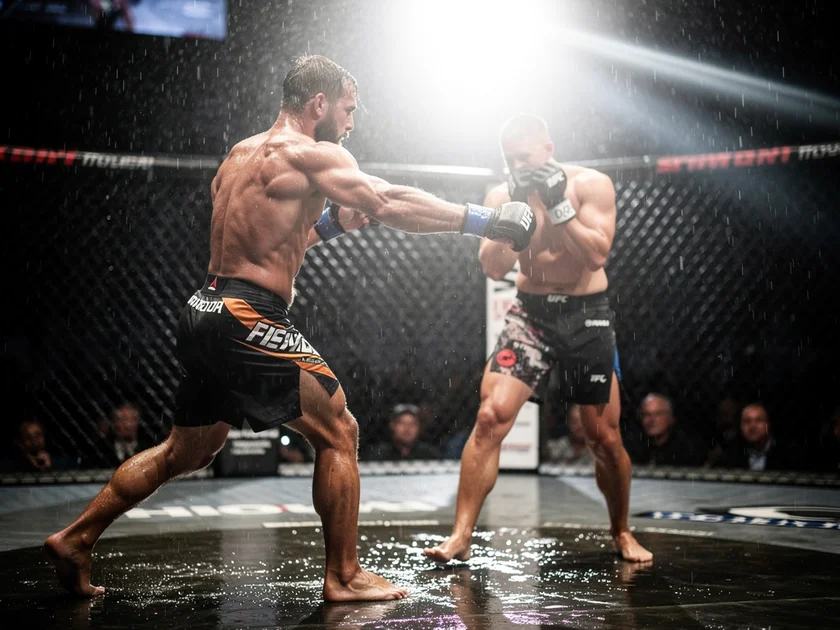
Petr Yan stands at a crossroads in the UFC bantamweight division in March 2026, with no fight currently booked but a résumé that keeps him inside the top-five conversation. The Russian striker, known inside fight circles as “No Mercy,” built his reputation on relentless pressure, elite striking volume, and a ground game sharp enough to neutralize most takedown-heavy opponents at 135 pounds.
Based on available data from the UFC rankings and recent divisional activity, Yan’s trajectory through 2026 depends heavily on how the bantamweight title picture resolves — and whether the promotion pulls the trigger on a high-stakes rematch or a fresh contender bout. The numbers suggest his peak technical window is still open, even as younger challengers crowd the ladder below him.
Petr Yan’s Place in the Bantamweight Division
Petr Yan occupies a complicated but compelling spot in the UFC bantamweight rankings heading into spring 2026. After losing the undisputed title to Aljamain Sterling via disqualification at UFC 259 and then dropping the interim belt to Sterling again at UFC 273, Yan rebuilt his stock with a decision win over Song Yadong and a dominant performance against Merab Dvalishvili — before the rematch with Dvalishvili shifted the calculus again. His record of 17-6 inside the UFC’s most talent-dense weight class reflects both his elite ceiling and the brutal margin for error at the top of the division.
Breaking down the advanced metrics from Yan’s peak performances, the film shows a fighter who throws at unusually high volume for a power striker — averaging over five significant strikes per minute in his best showings — while maintaining a takedown defense rate above 70 percent. That combination is rare at bantamweight, where most pressure fighters sacrifice one for the other. His footwork and head movement, refined over years of combat sambo and Muay Thai cross-training, give him angles that pure boxing-based opponents consistently struggle to read.
What Does Petr Yan’s Fight Style Demand From Opponents?
Petr Yan’s technical profile forces opponents into a specific dilemma: engage in a striking war at distance and absorb his volume, or shoot for takedowns and face his above-average scramble defense and submission awareness. Neither option is comfortable. Yan’s octagon control — his ability to cut off the cage and dictate range — is among the best in the bantamweight division, and it compounds the problem for wrestlers who need space to set up their attacks.
The numbers reveal a pattern in how Yan loses, too. His defeats have come against fighters who either disrupted his rhythm early with wrestling chains (Dvalishvili’s relentless pace being the clearest example) or landed a single clean counter that reset the fight’s momentum. His chin has been tested at the highest level, and while it has held in most exchanges, the Dvalishvili losses exposed a cardio ceiling in championship rounds that any future opponent will study closely. That’s not a fatal flaw — it’s a matchmaking variable that the UFC front office brass will weigh when slotting him into a contender bout.
Key Developments in the Bantamweight Landscape
- Yan’s professional record stands at 17 wins and 6 losses, with the majority of his defeats coming against opponents who held UFC gold at some point in their careers.
- His significant strike accuracy has historically hovered near 50 percent, above the UFC bantamweight average of roughly 44 percent, reflecting the quality of his setup work before committing to power shots.
- Yan’s combat sambo background — he is a multiple-time Russian national champion in the discipline — gives him a grappling base that pure strikers at 135 pounds typically lack, complicating game plans for one-dimensional wrestlers.
- The UFC bantamweight division currently features a logjam of contenders including Cory Sandhagen, Umar Nurmagomedov, and Song Yadong, meaning any path back to a title shot for Yan requires at minimum one high-profile win over a ranked opponent.
- Yan has competed primarily out of the Xtreme Couture and AKA affiliate network during his UFC tenure, training alongside fighters across multiple weight classes — a camp structure that has historically produced technically complete mixed martial artists with strong fight IQ.
Does Petr Yan Still Have a Realistic Title Shot in 2026?
A title shot for Yan in 2026 is plausible but not guaranteed, based on the current divisional structure. Umar Nurmagomedov, unbeaten inside the UFC and widely regarded as the division’s most complete prospect, figures to get the next crack at the belt if the championship picture clears. Yan would likely need to move past a top-five opponent — Sandhagen or a rematch with Song Yadong representing the most logical options — before the promotion considers him for another title opportunity.
Still, the UFC has shown willingness to fast-track rematches when the narrative is strong enough. Yan versus Sterling ran twice in consecutive years; a compelling case exists for revisiting any of his recent losses if the opponent’s profile lines up with what the promotion needs to sell a pay-per-view slot. His name recognition in Russia and across Eastern Europe gives him commercial value that pure rankings math doesn’t fully capture — a factor the matchmaking office considers even when it goes unspoken publicly.
Petr Yan’s Legacy and Long-Term Outlook
Petr Yan entered the UFC in 2018 with a highlight-reel knockout of Jin Soo Son and spent the next four years methodically dismantling every opponent placed in front of him until he reached the title. His UFC career, viewed across its full arc, reads as a study in how a technically sound fighter can dominate a weight class for a sustained period without relying on a single finishing weapon. He’s not a one-punch knockout artist in the traditional sense — his damage accumulates through volume, angles, and body work that breaks opponents down over three to five rounds.
The broader question for Yan’s legacy isn’t whether he belongs among the best bantamweights of his era — he clearly does — but whether a second title reign is achievable against a division that has evolved around him. Fighters like Nurmagomedov represent a new generation of complete mixed martial artists who grew up studying the same tape Yan helped create. That competitive feedback loop is what makes the UFC bantamweight division appointment viewing in 2026, and Yan’s place inside it remains far from settled.
What is Petr Yan’s current UFC record?
Petr Yan holds a professional MMA record of 17 wins and 6 losses as of early 2026. All six of his defeats have come against fighters who held UFC championship status at some point, reflecting the elite level of competition he has consistently faced at bantamweight.
Has Petr Yan ever been UFC bantamweight champion?
Yan captured the undisputed UFC bantamweight title by stopping José Aldo in the fifth round at UFC 251 in July 2020 on Yas Island, Abu Dhabi. He lost the belt via disqualification to Aljamain Sterling at UFC 259 in March 2021 after landing an illegal knee to a downed opponent — one of the most controversial title changes in UFC history.
What fighting style does Petr Yan use?
Yan blends combat sambo, Muay Thai, and boxing into a pressure-based striking system. He is known for high output — typically exceeding five significant strikes per minute at his best — combined with strong takedown defense above 70 percent, a rare pairing that makes him difficult to game-plan against at 135 pounds.
Who are Petr Yan’s main rivals in the bantamweight division?
Yan’s most significant rivalries have been with Aljamain Sterling, whom he fought twice for the undisputed title, and Merab Dvalishvili, whose relentless wrestling pace proved problematic across their encounters. Cory Sandhagen and Umar Nurmagomedov represent the contenders most likely to cross paths with Yan in a high-stakes 2026 matchup.
Where is Petr Yan from and what is his combat background?
Yan was born in Ekaterinburg, Russia, and began his combat sports career through combat sambo, earning multiple Russian national championship titles in the discipline before transitioning to professional MMA. His sambo base, combined with Muay Thai striking development, formed the technical foundation that carried him to a UFC title reign at bantamweight.