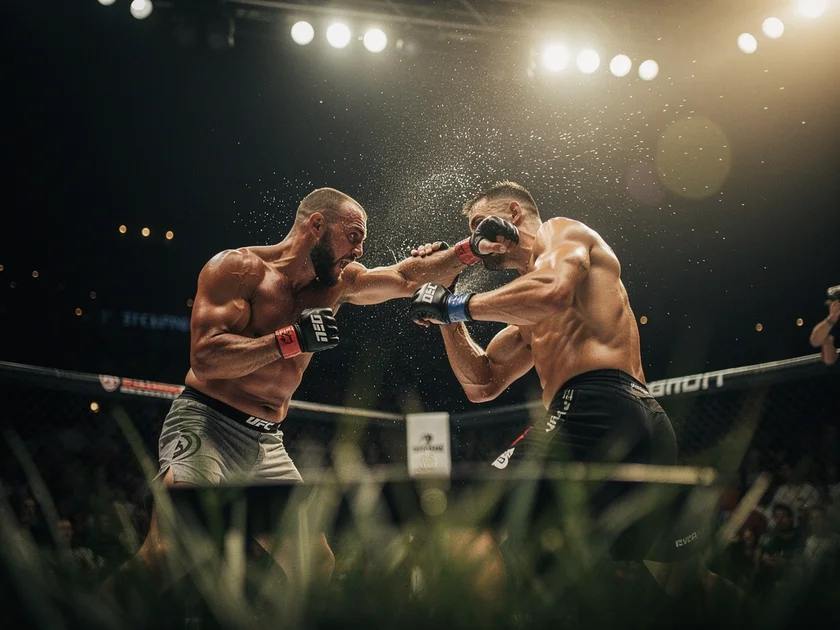
The UFC Middleweight Division is drawing serious attention at UFC Seattle, with Israel Adesanya and Joe Pyfer both completing fight week interviews ahead of the March 28, 2026 card. Two fighters from the 185-pound class appearing on the same event signals the promotion is treating this division as a marquee draw.
Adesanya, the former two-time UFC middleweight champion from Auckland, New Zealand, brings the kind of name recognition that moves pay-per-view numbers. Joe Pyfer is the hard-hitting knockout artist from New Jersey who has been grinding his way up the ladder with stoppages that caught the attention of UFC brass. Their combined presence makes this one of the more loaded 185-pound fight weeks in recent memory.
Israel Adesanya and the 185-Pound Landscape in 2026
Israel Adesanya returning to a UFC card is never a quiet event. The 36-year-old kickboxing specialist built his name on technical striking, elite cage control, and a fight IQ that routinely shut down wrestlers and power punchers. At his peak, his significant strike output ranked among the top five in divisional history, and his takedown defense cleared 80 percent across multiple title defenses.
The 185-pound picture has shifted considerably since his last title reign. Dricus du Plessis now holds the UFC middleweight belt. The South African champion has built his reputation on relentless forward pressure and a willingness to absorb punishment to land his own shots. Adesanya’s lateral movement and range control represent a natural counter to that approach — which is exactly why any title eliminator involving “The Last Stylebender” generates real divisional buzz. Based on fight week activity logged in Seattle, Adesanya completed his pre-fight interview obligations on schedule, suggesting he is healthy and ready to compete.
His career record of 24-7 includes 15 finishes. Losses have come against elite competition, not mid-tier opponents. That context matters when placing him in the current contender picture — a fighter of his caliber does not show up to fight week without a clear competitive purpose.
Joe Pyfer: Pushing Into Title Conversations
Joe Pyfer wrapped his official UFC Seattle media session on March 28, 2026, reinforcing his status as one of the division’s most aggressive climbers. His style is built around power punching and forward pressure — a direct contrast to the technical counter game that defined the Adesanya era. Both his chin and cardio have been stress-tested in competitive bouts, and film review shows steady improvement in his submission defense and ground control from camp to camp.
Pyfer’s trajectory inside the promotion has been steep. Stoppage wins announced genuine knockout power in both hands, and his appetite for close-quarters exchanges has made him a crowd favorite fast. At 28, he sits in the window where physical prime and accumulated cage experience start to converge — a dangerous spot for anyone across from him.
One fair counterpoint to Pyfer as an immediate title threat: he has not yet faced a top-five ranked middleweight in a full-length fight. Volume strikers with sharp footwork have given him problems in early rounds before he closes the distance. That gap in his record is worth watching before projecting him into a championship bout.
What UFC Seattle Means for the 185-Pound Rankings
UFC Seattle carries real ranking weight for the UFC Middleweight Division. Any performance-based movement in the top fifteen after this card will ripple through the contender queue heading into the summer schedule. UFC rankings update each week following events, so a sharp showing from either Adesanya or Pyfer could push matchmakers to fast-track title eliminator talks.
Ignacio Bahamondes and Navajo Stirling also completed their Seattle media sessions, adding cross-divisional depth to an already full card. While neither competes at middleweight, their inclusion reflects the UFC’s habit of stacking multi-division events that give hardcore fans several reasons to tune in. Alexa Grasso and Maycee Barber round out the fight week interview list, confirming the women’s divisions are well-represented alongside the men’s 185-pound action.
Chase Hooper’s fight week media appearance signals the lightweight division is also invested in the Seattle card, but the middleweight storylines — Adesanya’s continued pursuit of relevance and Pyfer’s upward climb — carry the most long-term divisional weight. The UFC’s matchmaking pattern over the past 18 months has consistently rewarded fighters who perform on high-profile cards with faster ranking movement, which raises the stakes for both men.
Key Developments at the Seattle Card
- Adesanya confirmed active status by completing his official UFC Seattle fight week interview on March 28, 2026.
- Pyfer joined him in the media rotation, marking the second UFC Middleweight Division competitor confirmed for the Seattle event.
- Navajo Stirling and Ignacio Bahamondes each conducted separate interviews for the card, indicating multi-bout cross-divisional depth.
- Alexa Grasso and Maycee Barber appeared in the fight week rotation, locking in women’s division slots on the event.
- Chase Hooper’s media appearance confirmed at least three weight classes are represented on the Seattle card.
Where the Division Goes From Here
UFC Seattle is a checkpoint, not a destination, for the 185-pound weight class. Dricus du Plessis has defended the belt with a physical, grinding approach that has answered every technical challenge so far. His next credible title defense needs a worthy opponent, and the Seattle performances from Adesanya and Pyfer will directly shape that conversation.
Adesanya’s path back to a title shot runs through consistent winning, but at 36, the window is getting smaller. A dominant Seattle performance would keep him in the top-three conversation and could set up a major title fight by late 2026. Pyfer’s road is longer but arguably more direct — stack two or three more wins against ranked opponents, and matchmakers will have no choice but to pull the trigger on a title eliminator bout.
The overall health of the UFC Middleweight Division looks strong entering the second quarter of 2026. Depth at 185 pounds has grown, with multiple fighters capable of winning on any given night. Fight week data from Seattle confirms the UFC is putting promotional energy behind the middleweight bracket — and historically, that kind of organizational focus tends to precede a stretch of elevated matchmaking activity at the weight class.
Frequently Asked Questions
Who holds the UFC middleweight title heading into UFC Seattle 2026?
Dricus du Plessis holds the UFC middleweight championship. The South African fighter won the belt and has defended it with an aggressive, pressure-heavy style that relies on volume and durability rather than technical distance striking.
How many UFC title defenses did Israel Adesanya complete during his championship runs?
Adesanya held the UFC middleweight title across two separate reigns and made multiple successful defenses, building a career record of 24-7 with 15 finishes. His title runs spanned several years and included wins over top-ranked contenders including Robert Whittaker and Paulo Costa.
What weight class does Joe Pyfer compete in?
Joe Pyfer competes at middleweight, which is the 185-pound weight class in the UFC. He trains out of New Jersey and has built his UFC record primarily through stoppage victories, establishing himself as a legitimate knockout threat in the division.
Which other fighters were confirmed for UFC Seattle fight week media?
Beyond Adesanya and Pyfer, the confirmed UFC Seattle fight week interview participants included Navajo Stirling, Ignacio Bahamondes, Alexa Grasso, Maycee Barber, and Chase Hooper — spanning at least three different weight classes across both men’s and women’s divisions.
How old is Joe Pyfer and why does his age matter for title contention?
Joe Pyfer is 28 years old, placing him at the intersection of physical peak and developing cage experience. Fighters in that age range inside the UFC typically post their most consistent results over the following two to three years, which is why his current trajectory draws genuine attention from divisional observers.