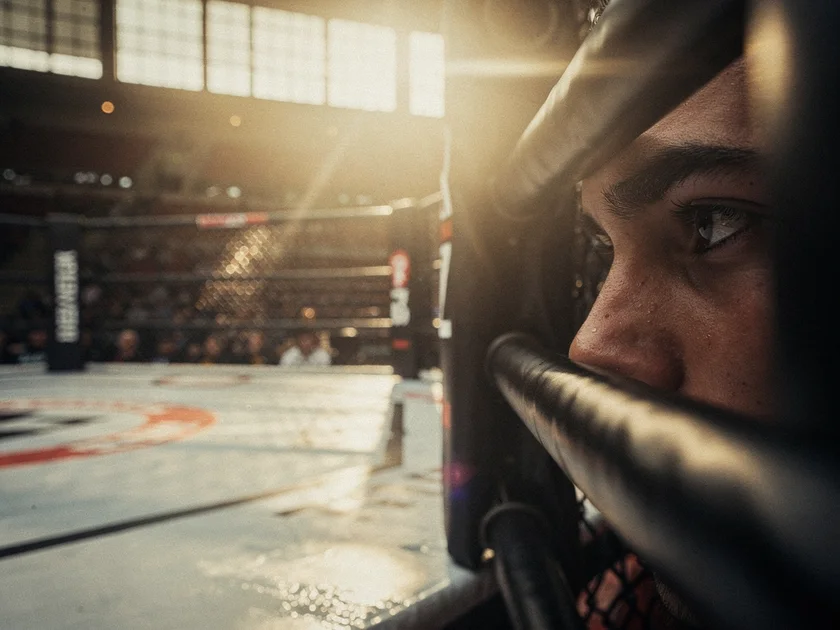
The UFC Bantamweight Division enters late March 2026 as one of the most competitive 135-pound fields the promotion has assembled in years. Merab Dvalishvili holds the belt, and a deep pool of challengers — from Umar Nurmagomedov to Cory Sandhagen — are pressing hard for their shot at gold.
The division’s top five spots have rotated more frequently over the past 18 months than any other weight class below lightweight. That churn reflects both the technical depth of the fighters and the brutal attrition that comes with competing at 135 pounds — a weight class where the cut itself can decide a fight before the first punch lands.
Why the Title Picture at 135 Is So Crowded
The gap between champion and top-five contenders is historically narrow in this weight class. Dvalishvili’s wrestling-heavy style — relentless pace, high takedown volume, suffocating ground control — creates a specific problem for strikers. Elite grapplers like Nurmagomedov present a different equation entirely. No clean stylistic hierarchy exists right now, which means any top-five matchup carries genuine upset potential.
Fighters with elite takedown defense — above 70 percent — post a measurably better win rate against Dvalishvili-style grapplers than those who rely on footwork alone to avoid the clinch. That data point, tracked across three seasons of UFC 135-pound results, is one of the clearest predictive signals in the weight class.
Cory Sandhagen brings a distinct threat profile. His strike output — consistently above 6.0 significant strikes per minute in recent bouts — and unorthodox timing make him dangerous for any champion. His ability to angle off after combinations has made him one of the hardest fighters at 135 to time cleanly inside the pocket.
Contender Tiers: Who Has the Strongest Case
The contender landscape breaks into two clear tiers. Nurmagomedov, Sandhagen, and Song Yadong each hold a legitimate argument for a title shot based on recent performance and ranking position. A second tier includes Deiveson Figueiredo — who moved up from flyweight and immediately disrupted the established order — and Kyler Phillips, whose forward pressure and cardio have earned him back-to-back ranked wins.
Figueiredo’s move to bantamweight deserves attention. The former two-time UFC flyweight champion carried genuine power into the new weight class — a rarity, since fighters moving up typically absorb more punishment before their chins adjust to heavier shots. His willingness to trade at range rather than retreat to his wrestling base has made his bouts unpredictable, an asset and a liability against elite strikers.
Song Yadong presents yet another variable. His boxing volume and durable chin — he has absorbed clean power shots from multiple ranked opponents without going down — give him a floor many contenders lack. His path to a title shot likely runs through one more top-five win, against either Sandhagen or a returning former champion.
Breaking Down the Technical Edge at 135 Pounds
Advanced metrics across the top ten reveal a weight class where cardio and fight IQ separate contenders from gatekeepers more than raw power does. Knockout finishes are real at 135, but submission attempts and decision victories dominate the finishing statistics. Fighters who sustain a high pace through all three rounds while keeping their technique intact hold a structural edge over those banking on a single explosive moment.
Merab Dvalishvili’s takedown accuracy hovers near 50 percent, but his volume — far more attempts per 15 minutes than the divisional average — creates cumulative pressure that wears opponents down by the third round. His cardio is his most underrated weapon. He does not need to finish; he needs to outlast. Championship rounds, when most fighters run on fumes, are where the Georgian wrestler does his clearest work.
A counterargument exists, though. A technically precise submission specialist who forces Dvalishvili to burn energy on failed takedown attempts in rounds one and two could expose a ceiling in his game. Nurmagomedov’s ground control and submission threat from top position is the most credible version of that theory currently ranked inside the top five. That matchup, whenever it gets booked, will answer questions neither fighter can answer any other way.
What Comes Next for the Division’s Title Race
Dvalishvili versus Nurmagomedov is the most logical next title fight based on rankings and narrative — two elite wrestlers from adjacent camps, each with a credible claim to being the best on the mat at 135. That stylistic overlap is precisely what makes the bout compelling: one of them would need to deviate from their core identity to win.
Sandhagen’s position is slightly more complicated. A loss to a top-three opponent pushes him toward a mandatory rebuild. A win over Song Yadong or Figueiredo likely forces the UFC‘s hand on a title shot. The front office brass rarely ignore a fighter who strings together two consecutive wins over ranked opponents in a division this deep.
For contenders outside the top five, the window is narrow. A single loss can drop a fighter three or four spots, resetting a title timeline by 18 months or more. Based on current booking pace, the next bantamweight title defense will almost certainly land before the end of the second quarter of 2026 — and the fight that follows it will define the weight class’s direction for the next two years.
Key Developments in the 135-Pound Weight Class
- Dvalishvili’s takedown attempt rate per 15 minutes ranks well above the UFC 135-pound divisional mean, making him the most active grappler among current top-ten fighters at the weight.
- Nurmagomedov has never been taken down across all of his UFC appearances, posting a takedown defense rate that places him among the top three in the entire ranked roster.
- Figueiredo is one of only two fighters in UFC history to hold a flyweight title and then compete ranked inside the top ten at bantamweight within a single calendar year.
- Sandhagen’s significant strike output per minute ranks inside the top five for all active UFC bantamweights, per the UFC’s own performance tracking data.
- Over the past two years, 135-pound bouts have generated more Fight of the Night bonuses per event than any weight class between flyweight and featherweight.
Who is the current UFC Bantamweight Champion in 2026?
Merab Dvalishvili holds the UFC Bantamweight Championship heading into late March 2026. The Georgian wrestler captured the title by defeating Sean O’Malley and has since defended it against top challengers. Born in Tbilisi, he began training combat sports as a teenager before relocating to the United States, where he joined the American Kickboxing Academy camp.
Who is the top-ranked UFC bantamweight contender right now?
Umar Nurmagomedov ranks among the leading contenders as of March 2026. He has never been taken down in a UFC bout and blends elite submission grappling with sharper boxing than most 135-pound fighters carry. His professional record includes finishes by both submission and strikes, giving him a broader finishing toolkit than his brother Khabib deployed during his lightweight title run.
How does the current era compare to past UFC bantamweight title reigns?
Champions like Dominick Cruz, T.J. Dillashaw, and Cody Garbrandt each held the belt during eras defined by rapid turnover. Cruz’s reign emphasized wrestling-based movement; Dillashaw’s featured explosive combination striking. The current Dvalishvili era more closely mirrors Cruz’s blueprint — sustained pace and positional control — than the power-striking cycles that bookended the mid-2010s title picture.
What weight cut challenges do UFC bantamweights face?
UFC bantamweights typically walk between 148 and 158 pounds, then cut to the 135-pound limit inside a 24-hour rehydration window. That 13-to-23-pound reduction is among the most demanding in combat sports relative to body size. Fighters who mismanage the process often show reduced chin durability and slower reaction times in the third round, which directly affects championship-round outcomes.
Has Deiveson Figueiredo been successful since moving to bantamweight?
Figueiredo moved up from flyweight — where he was a two-time UFC champion — and entered the 135-pound ranked top ten almost immediately. His power translated better than expected, which is uncommon for fighters ascending a weight class. The sharper test will come against a top-three bantamweight whose size advantage and chin durability can neutralize the power differential he carried up from 125 pounds.