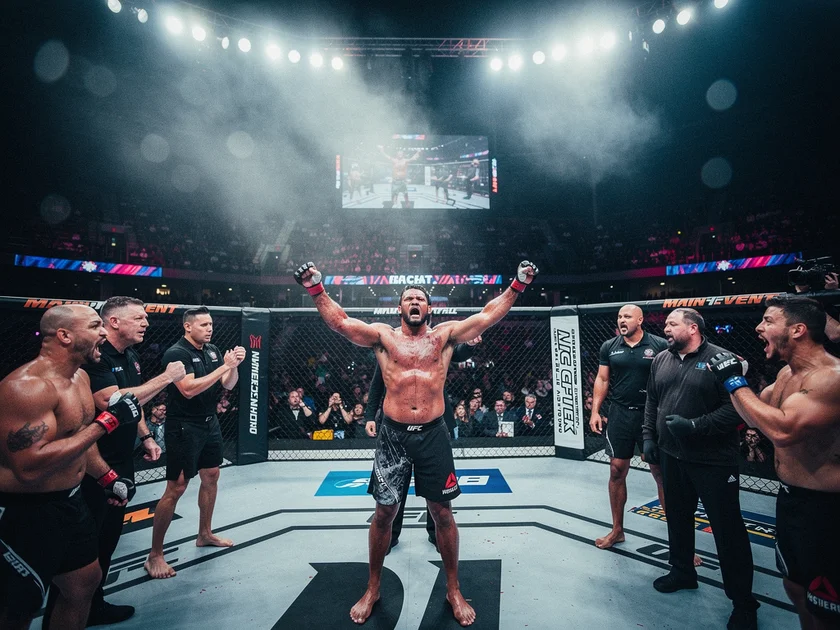
Heavyweight Tyrell Fortune earned his first UFC win Saturday night — but only after officials called him back to the cage following a scorecard misread that briefly handed the victory to Marcin Tybura. The March 28, 2026 bout added a fresh chapter to the long history of UFC injuries and officiating controversies. Fortune’s path to this moment stretched nearly a decade, making the mix-up all the more jarring.
UFC cage announcer Bruce Buffer read the scores in Tybura’s favor before officials caught the error and corrected it. Fortune returned to the octagon to receive the proper decision — a rare, awkward sequence that left the crowd buzzing.
Fortune’s Long Road to a First UFC Victory
Tyrell Fortune’s professional MMA debut came close to ten years before this UFC win, making Saturday’s result both overdue and complicated by the chaos surrounding it. The heavyweight division has always been unforgiving. Fighters grind through punishing exchanges, absorb serious physical damage, and deal with the compounding toll of UFC injuries before ever building a meaningful win streak.
Durability and fight IQ define careers at 265 pounds. Fortune’s ground control time and takedown defense improved steadily across his UFC appearances, pointing to a fighter who developed his craft rather than surviving on raw athleticism alone.
Marcin Tybura brought legitimate credentials into this fight. A seasoned UFC heavyweight with multiple finishes on his résumé, Tybura’s experience made Fortune’s decision win — once properly confirmed — a real statement result. Heavyweights in the UFC average longer gaps between bouts than fighters in any other weight class, partly because recovery from power shots at this level takes longer than most fans realize.
What Exactly Happened With the Scorecard Error?
Bruce Buffer, the UFC’s cage announcer since 1996, read the judges’ tallies incorrectly and declared Tybura the winner. UFC officials spotted the mistake fast. They called Fortune back before he fully left the competition area and corrected the announcement in front of a live crowd.
Scorecard errors of this magnitude are rare at major MMA events. Judges submit written tallies after each round, and commission officials handle the tabulation — not UFC staff directly. A misread at the announcement stage points to a procedural breakdown that the overseeing athletic commission will likely review. Incidents where a cage announcer misreads official tallies and requires an on-site correction happen fewer than a handful of times per decade at the top promotional level.
The UFC’s event operations have tightened considerably over the past decade, which makes a Buffer misread in 2026 feel more surprising than it would have in the early Zuffa era. UFC injuries always lurk in the background on nights like this, but the post-fight confusion added unnecessary stress to what should have been a clean moment for Fortune.
Key Developments From Fortune vs. Tybura
- Fortune’s pro debut came nearly ten years before this UFC victory — one of the longer waits for a first promotional win among active heavyweights.
- Buffer has served as the UFC’s official cage announcer since 1996; his misread briefly handed the result to Tybura before officials intervened.
- Fortune was physically called back to the cage after already beginning to exit the competition area, underlining how close the error came to standing uncorrected.
- Michael Chiesa competed in his 22nd UFC fight on the same card and called the number serendipitous heading into the bout.
- Athletic commissions assign mandatory medical suspensions after every UFC heavyweight bout, with decision fights typically drawing 30-to-60-day rest periods based on visible damage.
Rankings, Health, and What Comes Next
Fortune’s win now officially counts and should move him up the heavyweight ladder. One decision victory won’t push him into title contention immediately, but the division’s matchmakers now have a clearer picture of where he fits. The more pressing concern involves monitoring UFC injuries across the heavyweight card and determining when both Fortune and Tybura get medical clearance to compete again.
Michael Chiesa’s presence on the same card adds context. Competing in his 22nd UFC bout, Chiesa described the milestone number as serendipitous — a detail that suggests the fight carried personal weight beyond the result. Chiesa built his reputation across multiple weight classes with a wrestling-based submission game. His career arc offers a useful contrast to Fortune’s decade-long grind through the heavyweight ranks.
Tyrell Fortune’s physical condition after a competitive heavyweight decision will draw scrutiny from commission medical staff, as standard post-fight protocol requires. Power shots, clinch work, and ground-and-pound accumulate damage that doesn’t always surface immediately after the final horn. The UFC’s mandatory suspension system sets Fortune’s earliest return date — and for a fighter who spent ten years building toward this result, staying healthy enough to capitalize on the win matters far more than the scorecard confusion that nearly overshadowed it.
What caused the scorecard error in the Tyrell Fortune vs. Marcin Tybura UFC fight?
Bruce Buffer misread the judges’ scorecards and initially declared Tybura the winner before officials caught the mistake. The error happened at the announcement stage, not in the scoring itself, pointing to a procedural breakdown by commission staff. Fortune was called back to the octagon to receive the corrected result in front of the live crowd.
How common are UFC scorecard mistakes at major events?
Public scorecard corrections — where the wrong fighter gets announced as winner and the call is reversed live — are exceptionally rare at major MMA promotions. Historical records across combat sports show that cage announcer misreads requiring on-site correction happen fewer than a handful of times per decade at the top promotional level. Most scoring disputes involve judge tallies, not announcement errors.
Who is Tyrell Fortune and what is his UFC background?
Tyrell Fortune is a UFC heavyweight who made his professional MMA debut close to ten years before his first UFC victory on March 28, 2026. He competes in the 265-pound division and has shown steady improvement in ground control and takedown defense across his UFC run. His win over Tybura — a fighter with multiple promotional finishes — represents his first official UFC victory.
What happened with Michael Chiesa at the March 28 UFC event?
Michael Chiesa competed in his 22nd UFC bout on the March 28 card and called the milestone number serendipitous before the fight. A veteran who has competed across multiple weight classes, Chiesa built his UFC reputation on wrestling pressure and opportunistic submission attempts. His 22-fight UFC tenure puts him among the more durable athletes the promotion has featured across different eras.
How do UFC medical suspensions work after heavyweight bouts?
After every UFC event, athletic commission medical staff assess fighters and assign mandatory rest periods based on visible damage and fight conditions. Heavyweight decision fights typically draw suspensions ranging from 30 to 60 days, depending on cuts, swelling, or suspected concussive impact. These mandatory periods set the earliest date a fighter can be cleared to train and compete — separate from any additional voluntary recovery time a fighter or team chooses.