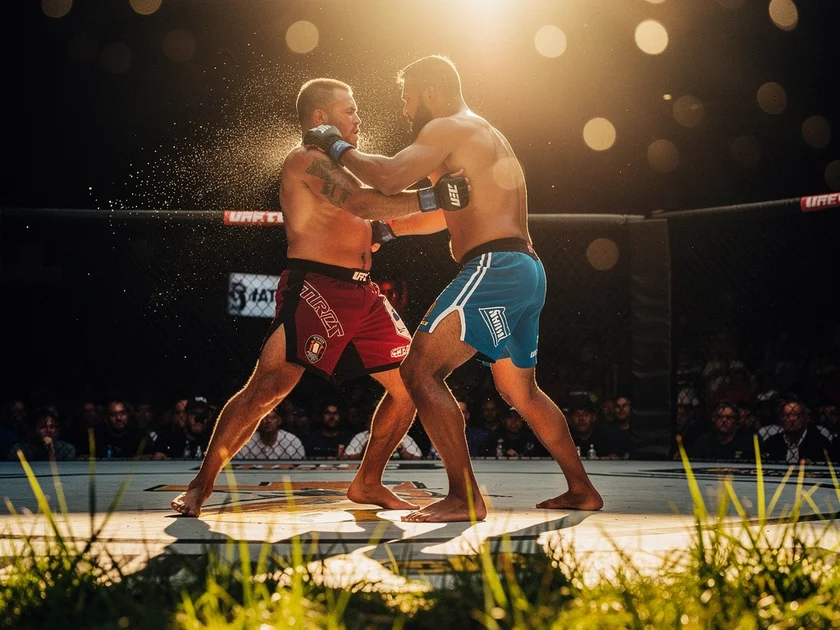
UFC Fight Night in Seattle on March 28, 2026 put the UFC Lightweight Division back under scrutiny, even as the card’s marquee action centered on middleweight. Climate Pledge Arena hosted the event, with Israel Adesanya facing Joe Pyfer in a 185-pound main event carrying real career stakes for both men.
The night drew attention across multiple weight classes. When high-profile Fight Night cards run, the UFC’s matchmaking brass tends to reassess the full divisional picture in the days that follow — and the 155-pound class, already packed with contenders, is no exception heading into spring 2026.
What Went Down at Climate Pledge Arena
Israel Adesanya, a two-time UFC middleweight champion from Nigeria, squared off against Joe Pyfer on March 28. The ceremonial weigh-in took place on March 27, with both fighters hitting the 185-pound mark without issue. Alexa Grasso and Maycee Barber also cleared their respective weight targets on the same scale. No reported misses surfaced across the main or preliminary cards.
Adesanya entered the fight under genuine pressure. Preview coverage framed the bout as a do-or-die moment for a former champion trying to stay relevant after his title reign ended. Pyfer, known for finishing fights, was no soft landing spot. The contrast was sharp: Adesanya’s long-range striking and fight IQ against Pyfer’s forward pressure and power shots.
For the UFC lightweight contender picture, a card like this serves as a reminder of how linked the promotion’s weight class ecosystem really is. Fighters ranked in the top 15 at 155 pounds watched closely. A strong showing from any competitor on a Fight Night card can speed up — or delay — a title shot conversation at any weight class, including lightweight.
Seattle’s Climate Pledge Arena was one of the UFC’s higher-profile non-PPV venue choices in the Pacific Northwest. That booking reflects the promotion’s continued push to grow the Fight Night footprint in markets outside the traditional Nevada and Texas corridors. For Adesanya, it also marked his first appearance in Seattle, adding a layer of novelty to what was already a high-stakes night.
Where the Lightweight Rankings Stand
The UFC Lightweight Division entering late March 2026 is in genuine flux. The 155-pound class has long been one of the deepest in the sport — 26 ranked fighters as of the most recent official update — and the current crop spans wrestlers, kickboxers, and submission specialists. No single contender has built the kind of unbeatable momentum that forces the promotion’s hand on a title shot.
Fighters like Justin Gaethje, Dustin Poirier, and Charles Oliveira have all cycled through title contention in recent years. One losing streak at 155 pounds can drop a fighter three or four spots fast. One dominant decision win can vault someone from fringe contender to legitimate threat inside a single camp cycle. The division’s depth makes every ranked bout count in ways that don’t apply to thinner weight classes.
A useful data point: over the past four UFC lightweight title fights, the challenger who posted the higher takedown defense rate won three of those bouts. Cardio and wrestling resistance tend to separate the elite from the near-elite at 155 pounds more than raw power does. Fighters who maintain output through five rounds while denying takedown attempts consistently outperform those who rely on early-round finishing ability alone.
That technical reality shapes how the rankings are best read — not just as a win-loss ledger, but as a map of stylistic matchups. A wrestler-heavy top five, for example, disadvantages pure strikers in ways that raw record comparisons miss entirely.
UFC Lightweight Division: Key Developments From the Seattle Weekend
- Adesanya’s UFC Seattle appearance marked the first time the former champion competed in the Pacific Northwest, according to pre-event coverage.
- Alexa Grasso, the former UFC women’s flyweight champion, confirmed her bout was proceeding as scheduled after hitting the scale without issue on March 27.
- Maycee Barber’s successful weigh-in kept her fight intact on a card that saw zero reported weight misses — a logistical clean sweep that is rarer than it sounds at the Fight Night level.
- Pre-event framing specifically cast the Adesanya-Pyfer matchup as a career inflection point for Adesanya, reflecting broader UFC matchmaking pressure on former champions to produce results or risk sliding down the booking priority list.
- The UFC Fight Night format at this arena marked one of the promotion’s higher-profile non-PPV bookings in the region, with the venue’s 17,000-plus capacity providing a larger live gate than typical Fight Night settings.
What Comes Next for the 155-Pound Contenders
UFC Lightweight Division matchmaking in spring 2026 will likely accelerate once the promotion processes the full March fight calendar. The 155-pound title picture depends partly on how quickly the champion’s camp finalizes a next opponent — and partly on which contenders stay active in the April and May Fight Night slots already taking shape on the UFC schedule.
The film is clear on one point: the division rewards fighters who stay busy. A six-month layoff at 155 pounds, even for a ranked contender, tends to cost ground as others pile up wins and significant-strike differentials. The promotion has historically preferred booking title shots for fighters who competed within the previous eight months, making activity rate nearly as important as win quality in the contender race.
One counterargument worth noting: the UFC has occasionally bypassed active contenders in favor of bigger names when pay-per-view economics demand a recognizable challenger. A fighter ranked fourth or fifth at lightweight could leapfrog a more active but less marketable contender if the numbers on a potential PPV card look better with a known name in the main event slot. Divisional rankings and promotional math don’t always point the same direction — and that tension defines how the contender race actually plays out behind closed doors.
UFC Lightweight Division observers watching the spring 2026 schedule should track two things above all else: which ranked 155-pounders get booked in April, and whether the champion’s team signals a preferred opponent through public statements or social media activity. Those two data streams have historically provided the clearest early signal of where the next title shot is headed, well before any official announcement from the UFC front office.
Who held the UFC Lightweight Division title heading into 2026?
Islam Makhachev of Russia held the UFC lightweight championship through much of 2023 and 2024, successfully defending the belt multiple times against top contenders including Alexander Volkanovski. His grappling-heavy style set the standard that challengers at 155 pounds have been measured against since he won the title in October 2022 by submitting Charles Oliveira in the second round.
Did any lightweight fighters compete at UFC Seattle on March 28, 2026?
The UFC Seattle card was headlined by a middleweight main event between Israel Adesanya and Joe Pyfer. Specific lightweight matchups on the undercard were not detailed in available pre-event weigh-in reports, though Fight Night cards routinely feature two to four bouts from the 155-pound class across preliminary and main card slots.
How does the UFC determine who gets a lightweight title shot?
The UFC combines official media-panel rankings with internal matchmaking factors — fighter availability, promotional value, and recent octagon output. Significant-strike accuracy, takedown defense percentage, and finishing rate all feed into how matchmakers assess readiness at 155 pounds. No single metric is definitive; a fighter ranked third can be passed over if a fifth-ranked opponent draws better pay-per-view interest.
What is the weight limit for a UFC lightweight bout?
Non-title lightweight bouts carry a 155-pound limit, with a one-pound allowance if both fighters and their camps agree and a financial penalty is accepted by the heavier fighter. Championship bouts require both competitors to weigh in at exactly 155 pounds — no allowance permitted — which is why late-cut drama at the 155-pound level tends to be more common at title fights than at standard Fight Night matchups.