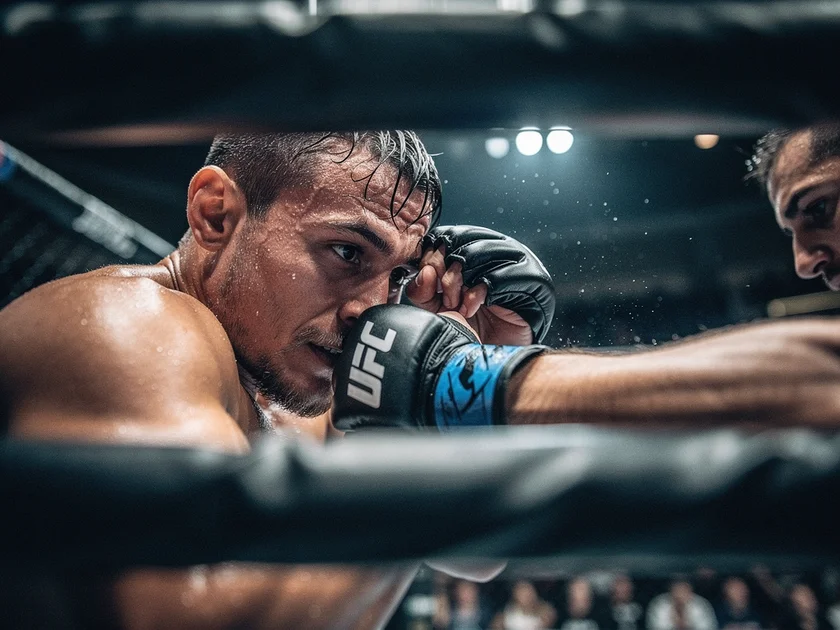
UFC Injuries are a constant concern heading into Seattle, where a loaded card featuring Israel Adesanya, Alexa Grasso, Maycee Barber, Joe Pyfer, Ignacio Bahamondes, and Bruna Brasil entered the final countdown Saturday, March 28, 2026. Fighter health drives the conversation whenever a card this deep approaches the cage.
The UFC Seattle interview circuit — hosted by Heidi Androl — put each competitor on record. Those sit-downs serve as the closest thing to a public medical check-in the promotion provides. What fighters say, and what they skip, tells a trained observer a lot about who arrived whole.
What We Know About UFC Injuries on the Seattle Card
No fighter on the UFC Seattle roster publicly disclosed a fight-altering injury heading into the event. That baseline matters. The promotion’s fight week media cycle is the last major checkpoint before Washington State Athletic Commission pre-fight medicals confirm roster status. Late UFC injury scratches would surface after those exams.
Israel Adesanya — former UFC middleweight champion — completed his fight week interview, a standard green-light signal from the media team that he is cleared and present. Adesanya has fought through shoulder and knee complaints across his career. His durability has been tested at the highest level, and his karate-influenced distance game demands full physical function to execute cleanly.
Alexa Grasso, the Mexican flyweight who unseated Valentina Shevchenko for the title in 2023, also sat for her Seattle session. Grasso’s camp has managed weight-cut logistics carefully since her title reign began. Flyweight cuts from 130 to 125 pounds carry real physiological risk — a separate category from the contact-sport UFC injuries that dominate headlines but no less relevant to fight-night performance.
Barber, Pyfer, and the Depth Behind the Headlines
Maycee Barber’s fight week appearance carries extra weight from an injury-history angle. Barber tore her ACL in January 2020. That setback derailed one of the most hyped early careers in women’s MMA. Her road back through strawweight and flyweight proved her explosive leg kicks and forward pressure survived the reconstruction. Showing up healthy in Seattle confirms the work held.
Joe Pyfer, the hard-hitting middleweight prospect, logged his fight week interview without any visible physical concerns. Pyfer finishes fights early. That pattern limits cumulative damage — a real advantage for a fighter still building his UFC record in his late 20s. Early finishes mean fewer rounds absorbing shots, fewer training camp miles on the body.
Ignacio Bahamondes, the Chilean lightweight, also cleared his media obligations. His spinning attack game demands full hip and knee function. Any lower-body UFC injury would show immediately on fight night — you cannot fake your way through a question-mark kick on a compromised leg. Bruna Brasil rounds out the confirmed interview group, her presence in the media cycle confirming she made the Seattle trip healthy.
Why Tracking UFC Injuries Before Each Event Matters
UFC injury management sits at the intersection of athletic commission oversight, promotional scheduling pressure, and individual fighter decision-making. Fighters train through minor tears, bone bruises, and soft-tissue damage that would sideline athletes in sports with longer seasons. Short answer: the MMA calendar offers no equivalent to sitting out a week in a 162-game schedule.
Historical UFC data shows roughly 15 to 20 percent of announced bouts see at least one change between initial booking and fight night. That figure reflects sport-wide reality. Full-contact sparring, hard weight cuts, and high-intensity conditioning cycles all create UFC injury exposure in the final weeks before a bout — Seattle is not immune to that math.
UFC Seattle’s fight week interview format serves a secondary purpose beyond promotion. A fighter who visibly favors a limb, hedges on training camp questions, or shortens answers about physical prep is often signaling something the official record will not capture. None of the six Seattle participants showed those markers in their published sessions. That is a good sign. Not a guarantee — but a good sign.
Rankings Impact and What Seattle Decides
Israel Adesanya’s octagon return carries middleweight ranking weight regardless of result. A win pushes him back toward title contention at 185 pounds. A loss complicates a legacy that already includes two championship reigns. Either outcome recalibrates how the matchmaking team approaches the Dricus du Plessis and Sean Strickland contender picture.
Alexa Grasso’s bout carries similar stakes in women’s flyweight. Her octagon control and submission defense have sharpened since her title run, but a fresh opponent in Seattle tests whether those gains hold under pressure. For Maycee Barber, a strong flyweight performance keeps her inside the top-five conversation — a bracket that includes Erin Blanchfield, Manon Fiorot, and Valentina Shevchenko’s persistent presence.
From a pure fight-craft view, the Seattle card concentrates technical strikers across multiple weight classes. Adesanya’s distance management, Bahamondes’s spinning attack volume, and Barber’s relentless forward pressure give the event real stylistic range. UFC injury attrition before the opening bell would genuinely hurt the product — which makes the clean fight week health reports all the more welcome.
Key Developments Before UFC Seattle
- Heidi Androl conducted all six fight week interviews for UFC Seattle on March 28, 2026, covering Adesanya, Grasso, Barber, Pyfer, Bahamondes, and Brasil in a single media cycle.
- The UFC Seattle fight week content published at 02:17 GMT on March 28 — the promotional machine cleared all six fighters for media duties inside the final 24 hours before the event.
- Bruna Brasil’s inclusion in the interview rotation adds a Brazilian contingent to the Seattle card and confirms her active status in the women’s division heading into 2026.
- Pyfer’s clean fight week appearance is consistent with a camp that has avoided major pre-fight UFC injury disclosures throughout his UFC tenure, preserving his status as one of middleweight’s more durable finishers.
- Bahamondes’s confirmed media clearance keeps the full lightweight slot intact — his fight-night health matters especially given that spinning techniques place acute stress on ankle and knee joints.
What UFC injuries have affected Maycee Barber’s career?
Maycee Barber suffered a torn ACL in January 2020 during her early UFC run, ending a stretch in which she had been promoted as one of women’s MMA’s fastest-rising prospects. The knee reconstruction kept her sidelined for over a year, and she returned to compete at both strawweight and flyweight. Beyond the ACL, Barber has spoken publicly about managing the psychological side of injury recovery — the fear of re-injury on explosive movements like leg kicks is a documented challenge for fighters returning from major knee surgery. Her UFC Seattle fight week participation in March 2026 confirmed she arrived healthy.
How does the UFC handle fighter injuries before a scheduled bout?
The UFC uses a layered system: internal promotional checks run alongside state athletic commission pre-fight medicals. Washington State requires physical exams before issuing bout approvals. Fighters are not required to disclose training camp UFC injuries publicly. Fight week media appearances often serve as the first informal confirmation that a competitor arrived without a fight-ending physical issue. Notably, some fighters negotiate injury clauses into contracts that allow withdrawal without financial penalty if a licensed physician certifies the injury — details that rarely surface publicly until after a withdrawal occurs.
Is Israel Adesanya still ranked in the UFC middleweight top five?
Adesanya held two separate UFC middleweight title reigns and has stayed inside the top five at 185 pounds through most of his post-championship run. His exact position shifts with divisional activity involving Dricus du Plessis, Sean Strickland, and Robert Whittaker. One underreported detail: Adesanya’s striking accuracy percentage — historically among the highest in the division — tends to dip in bouts where he carries a shoulder issue, making pre-fight physical status a meaningful variable for handicapping his performance at UFC Seattle.
What weight class does Alexa Grasso compete in?
Alexa Grasso competes at women’s flyweight (125 pounds), though she built her early UFC career at strawweight (115 pounds). She captured the flyweight title by submitting Valentina Shevchenko in March 2023. One detail often overlooked: Grasso was a significant underdog for that bout, with oddsmakers listing Shevchenko as a heavy favorite. Managing the jump from strawweight to flyweight — and the corresponding weight-cut adjustments — was a factor her team cited in her improved cardio output during the Shevchenko fight.
Who is Ignacio Bahamondes and what makes him a UFC contender?
Ignacio Bahamondes is a Chilean lightweight known for unorthodox striking, particularly spinning techniques and high-volume kicking combinations rare at the UFC level. He became more widely recognized after a highlight-reel spinning heel kick finish that circulated heavily on social media. His style demands full lower-body health — hip flexors, knees, and ankles absorb acute stress from spinning attacks — which makes pre-fight UFC injury status especially relevant when evaluating his fight-night ceiling. His Seattle fight week interview confirmed he was present and cleared for media obligations.