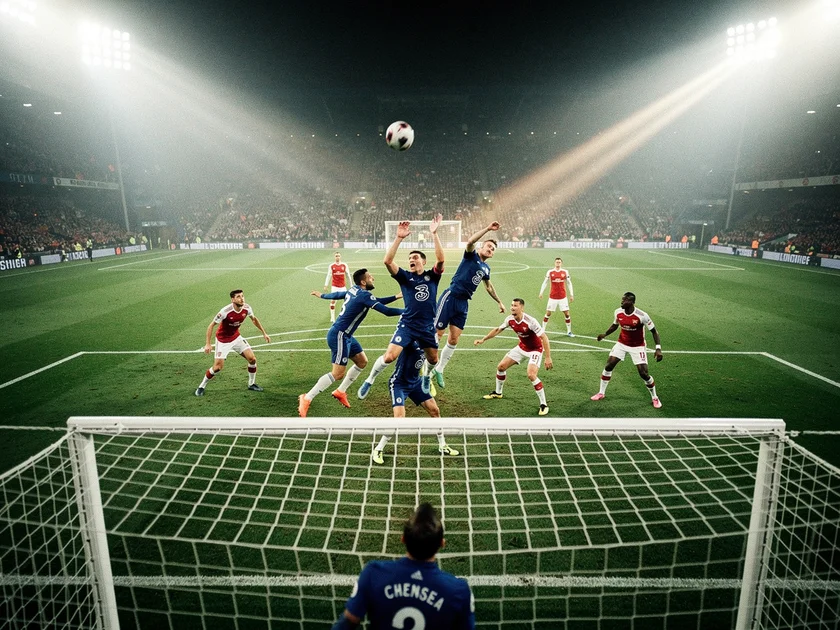
Premier League VAR decisions and refereeing standards are back in the spotlight after the league’s sporting directors held formal talks over the surge in set-piece goals and penalty-area holding, raising concerns about the quality of the spectacle. The Professional Game Match Officials body — known as PGMO — introduced a clampdown on holding in the box at the start of this season following discussions with the Premier League last summer. That crackdown, and the broader debate around dead-ball situations, has pushed officiating standards to the centre of the conversation once again.
The numbers reveal a pattern that is hard to ignore. Set pieces account for 27.1% of all Premier League goals this season, excluding penalties, the highest share among Europe’s top five leagues. That figure is driving both tactical shifts and frustration at the top of the table.
Background: Why Are Set Pieces Causing So Much Debate?
Set-piece dominance in the Premier League has grown steadily, and the 2025-26 season has brought it to a head. Sporting directors across the division met to discuss the trend after concerns mounted that corner routines and dead-ball deliveries were flattening open-play creativity and making matches less watchable for a global audience.
The PGMO clampdown on penalty-area holding was agreed upon after talks between the officials’ body and the Premier League last summer. The logic was straightforward: if referees called holding more tightly, clubs would be forced to find goals through open play. The numbers suggest the crackdown has not reversed the trend. Set-piece goals kept climbing regardless, and now the debate has expanded beyond officiating into the tactical choices clubs are making.
Breaking down the advanced metrics, the correlation between VAR intervention on penalty-area fouls and the rise of set-piece routines is clear. Clubs have adapted their corner and free-kick delivery to exploit the grey area between what VAR flags and what referees allow in real time. That tactical evolution is now the subject of boardroom-level concern across the division.
The statistics frame the argument sharply. Liverpool boss Arne Slot said this week that his “football heart doesn’t like” the growing reliance on set pieces, a candid admission from the manager of one of the division’s top clubs. Slot’s comments carry weight given Liverpool’s own use of dead-ball situations throughout the campaign.
Arsenal’s pursuit of a first Premier League title in 22 years has been directly fuelled by set-piece output. Dead-ball situations have produced 22 of Arsenal’s 59 league goals this season, with 16 of those coming from corners alone. That output has drawn criticism from rival managers, who argue that Arsenal’s corner delivery and blocking routines push the boundaries of what referees — and VAR — should allow.
The Premier League carries more set-piece goals than any other top-five European league this season. That distinction matters for the league’s global brand, which markets itself on pace, intensity, and attacking football. A product increasingly shaped by rehearsed dead-ball sequences sits awkwardly alongside that identity.
Key Developments in the Set-Piece and Officiating Row
Premier League sporting directors held direct talks about the rise of set-piece goals and holding in the penalty area, reflecting boardroom-level concern about the spectacle.
PGMO instituted a clampdown on penalty-area holding for the 2025-26 season after discussions with the Premier League held the previous summer.
Set pieces account for 27.1% of Premier League goals this season, excluding penalties — the highest figure across Europe’s top five leagues.
Arsenal have scored 22 of their 59 league goals from dead-ball situations, including 16 from corners, drawing criticism from rival managers.
Arne Slot publicly stated his “football heart doesn’t like” the growing importance of set pieces in the modern game.
Does Premier League VAR Decisions Policy Need to Change?
Based on available data, the current VAR framework is struggling to keep pace with how clubs exploit penalty-area routines at set pieces. PGMO’s holding clampdown was designed to reduce cynical blocking, but the numbers suggest clubs have simply adjusted their methods rather than abandoning dead-ball strategies entirely.
One counterargument worth considering: set-piece goals are not inherently bad football. Delivery, movement, and timing at corners require genuine skill and preparation. The concern from sporting directors is less about the goals themselves and more about whether the current officiating framework — including how VAR reviews penalty-area incidents — is being applied consistently enough to level the playing field.
Tracking this trend over three seasons, the jump in set-piece reliance tracks closely with VAR’s expanded role in reviewing contact in the box. Clubs have learned that borderline holds are rarely overturned by VAR unless they are obvious. That knowledge shapes how coaches design their corner routines. Until PGMO and the Premier League align on a stricter, more consistent standard — one that VAR can enforce clearly — the tactical incentive to pack the box at dead balls will not go away.
Arsenal’s title push, built substantially on corner-kick delivery and well-drilled blocking runs, puts the debate in sharp relief. Their set-piece scheme analysis is already a reference point for clubs across Europe. Whether the Premier League moves to tighten VAR review criteria for holding at set pieces, or leaves the current framework in place, will shape how clubs build squads and prepare tactics for the 2026-27 season and beyond.