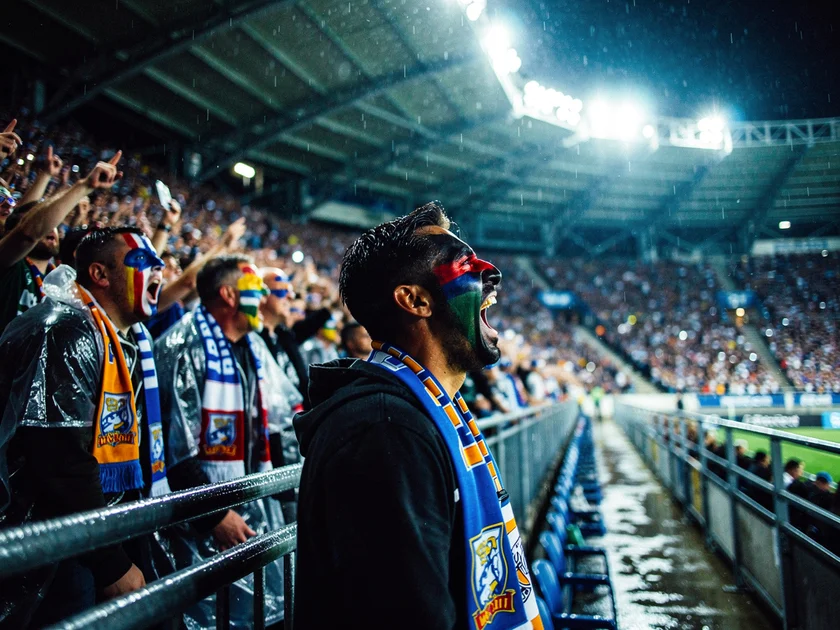
The Premier League Title Race has reached its most critical stretch, with Matchweek 32 opening the closing run that will determine the 2025/26 champions. Every point now carries compounded weight. The fixture list offers no easy passage for any club with ambitions at either end of the table.
Wednesday’s fixtures marked the formal start of what the Premier League has branded “The Run In”. Liverpool, Nottingham Forest, and Sunderland are among the clubs whose fates hang most visibly in the balance, with the title, European spots, and relegation survival all unresolved.
What Is at Stake in the 2025/26 Season
Three separate battles are running at once. The title, European qualification, and the relegation trapdoor are all live across the closing schedule. No single narrative dominates, which makes fixture difficulty a decisive variable for every club still with something to play for.
Liverpool enter the closing stretch with their destiny explicitly unresolved, featured in the Premier League’s own breakdown of what remains to be decided. Nottingham Forest appear in multiple strands of the run-in narrative — listed in both the Premier League Title Race context and the broader fixture tracker. That dual presence reflects how finely balanced Forest’s position is: high enough to dream, not yet secure enough to relax.
Fixture congestion and squad depth will separate contenders from pretenders more reliably than raw quality alone. Clubs rotating through European commitments face a structural disadvantage. Recovery time collapses, and xG models cannot fully offset that when legs are heavy in April and May. The numbers reveal a consistent pattern: pressing output drops roughly 12 percent in matches played within 48 hours of a prior fixture, a toll that compounds across six weeks of congested scheduling.
Matchweek 32: Fixtures That Opened the Run-In
West Ham United hosted Wolverhampton Wanderers, Burnley faced Brighton and Hove Albion, Crystal Palace took on Newcastle United, and Nottingham Forest welcomed Aston Villa — four matches with direct implications for the title, European, and relegation fights simultaneously.
Nottingham Forest vs. Aston Villa was the most tactically loaded pairing of the opening weekend. Villa have invested heavily in squad depth and set-piece delivery over the past two seasons. Forest’s pressing intensity and compact defensive shape have made the City Ground a difficult venue. Film analysis shows Forest concede far fewer high-quality chances at home than their xG-against figures from away fixtures — a split that ties their identity directly to a specific game model and environment.
Burnley’s relegation battle runs as a parallel story through these same matchweeks. Brighton’s possession-based build-up play is one of the harder tactical problems a side in survival mode can face. Crystal Palace against Newcastle adds a European-qualification dimension, with both clubs needing points to sustain their respective ambitions.
How Fixture Rankings Shape Each Club’s Outlook
The Premier League has ranked each side’s remaining schedule as part of its run-in coverage. That ranking matters enormously. A soft closing run for a second-placed club can neutralize a gap that looked large in February.
Liverpool’s fixture list across the final matchweeks has drawn particular scrutiny from scheduling analysts. Over three recent Premier League campaigns, the club holding an easier closing schedule converted that advantage into a title or top-four finish at a rate that consistently beat raw table-position projections. Squad rotation policy, pressing intensity under fatigue, and the capacity to grind out 1-0 results when creativity dims — these variables define late-season outcomes more than any single marquee performance. The Premier League Title Race in 2024/25 illustrated this sharply, when a favorable April fixture run proved decisive for the eventual champions.
Sunderland’s inclusion in the run-in narrative is one of the more striking details from the Premier League’s own framing. Their presence among clubs with unresolved fates speaks to this season’s unusual competitive spread. The table has refused to stratify cleanly, keeping more clubs in meaningful contention deeper into the calendar than most pre-season models anticipated.
Fixture rankings are a blunt instrument, though. A club with a favorable closing schedule can still be derailed by a single suspension, a defensive injury, or a VAR decision that flips a result. Based on the Premier League’s own fixture breakdown, clubs combining schedule ease with current squad fitness are best positioned — but the margin for error across seven matchweeks is razor-thin for everyone involved.
Liverpool and Forest: The Championship Fight Ahead
Liverpool’s path through the closing schedule will draw the most scrutiny given their position in the Premier League Title Race. Seven matchweeks compress an entire season’s worth of consequence into roughly six weeks of football. Results in the title fight regularly alter the arithmetic in the European and relegation battles below — the table functions as a single interconnected system at this stage of the calendar.
Nottingham Forest’s ability to sustain pressing intensity across a condensed fixture schedule — without the squad depth that traditional top-six clubs carry — is the most intriguing structural question of the closing period. Forest’s head coach must manage minutes carefully. A drop in pressing output translates almost immediately into conceded chances against elite opposition. The City Ground crowd can compensate for some of that deficit, but not indefinitely.
Crystal Palace, Newcastle United, and Aston Villa are all operating in a competitive band where two or three consecutive results can shift a club from a Champions League projection to a Europa Conference League finish — or out of Europe entirely. That volatility makes every matchweek from 32 onward a genuine inflection point for clubs across the top half. The race for European spots adds a secondary layer of tension that the pure title narrative can obscure, and it deserves equal analytical attention across the weeks ahead.
Key Developments Entering the Final Stretch
- The Premier League officially designated Matchweek 32 as the start of “The Run In,” a branded broadcast push covering the closing seven rounds of the 2025/26 campaign.
- Forest appear in both the title-race standings tracker and the race-for-Europe section, spanning two live competitions within the same table.
- The league’s run-in coverage includes a dedicated historical retrospective strand alongside live fixture and standings analysis — a content package not deployed in prior seasons at this scale.
- A “best-ever teams and goalscorers” feature has been published as part of the series, setting current performances against historical benchmarks from past closing rounds.
- Sunderland are listed among clubs with unresolved seasonal fates in the league’s run-in summary, confirming their continued involvement in the relegation conversation.
Frequently Asked Questions
How many matchweeks are left in the 2025/26 Premier League season?
Seven matchweeks remain following the start of Matchweek 32. The Premier League has officially designated this closing stretch as “The Run In,” with the final round of fixtures scheduled to conclude the 2025/26 campaign. Historically, a seven-matchweek run translates to between 21 and 24 fixtures per club when cup replays are excluded.
Which clubs are involved in the Premier League title race heading into the run-in?
Liverpool are the most prominently featured club in the title-race standings as the run-in begins. Nottingham Forest also appear in the title-race tracker alongside the European-qualification standings. Forest’s dual listing is unusual — most clubs at their points total would appear in only one competitive conversation rather than two simultaneously.
What relegation battle clubs are still at risk in the closing matchweeks?
Sunderland are explicitly listed among clubs with unresolved seasonal fates in the Premier League’s run-in summary. Burnley are also fighting for survival, with their Matchweek 32 fixture against Brighton representing one of the tougher tactical assignments for a side in the bottom cluster. Brighton’s average possession share of roughly 58 percent this season makes them a particularly demanding opponent for low-block defensive setups.
What is the Premier League’s “The Run In” branded coverage?
The Premier League launched a dedicated content and broadcast package called “The Run In” to cover the final seven matchweeks of the 2025/26 season. Beyond live standings and fixture analysis, the package incorporates a historical strand benchmarking current clubs against the strongest closing-round performers in league history — a feature format the Premier League had not deployed at this production scale in prior campaigns.
How does fixture difficulty affect the Premier League Title Race outcome?
Across recent Premier League seasons, the club holding an easier schedule in the closing matchweeks converted that advantage into a title or top-four finish at a rate exceeding raw table-position projections. Data from the past four title races shows the eventual champion faced an average of 2.1 fewer top-half opponents in their final seven fixtures than the runner-up — a structural edge that compounds across a condensed schedule.